Occupational hygiene surveys and monitoring.
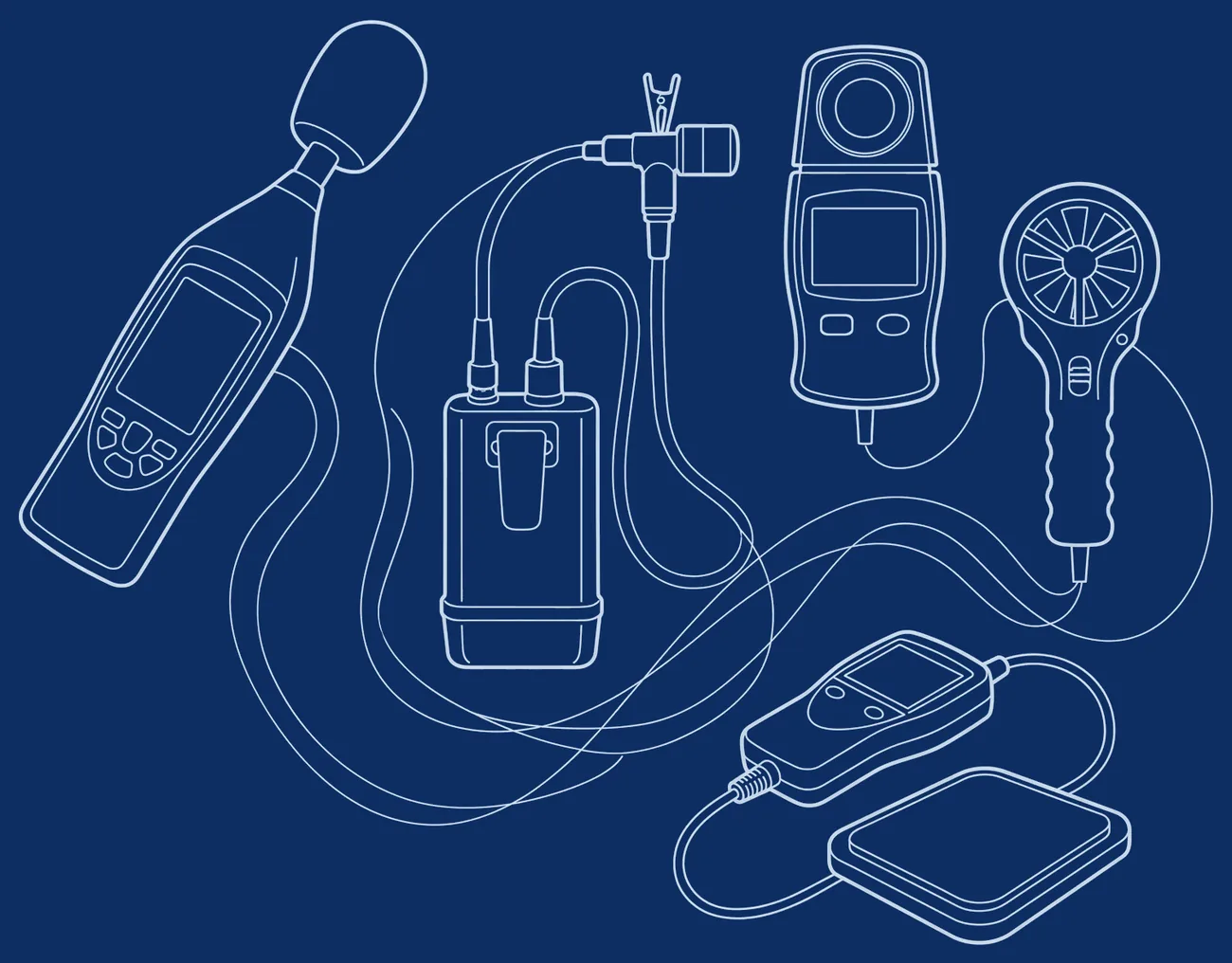
Fifteen survey disciplines, each with its own statutory trigger, its own governing standard and its own calibrated instrument. Sampling is analysed by a SANAS ISO/IEC 17025 accredited laboratory and reports are signed by a Registered Occupational Hygienist.
Measured, not assumed
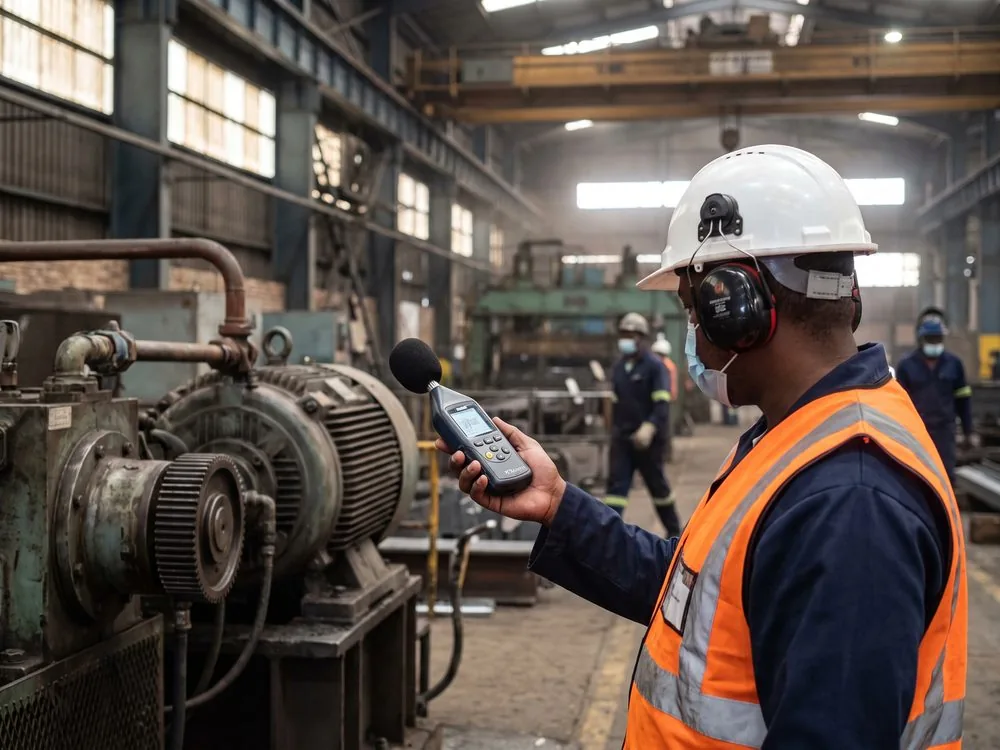
Occupational hygiene happens where the work does, on the plant floor, with calibrated instruments.


The fifteen disciplines
Each survey answers a different statutory question. Together they establish what your people are actually exposed to.
Hazardous chemical agents
Personal exposure sampling
Hazardous Chemical Agents Regulations 2021 · OESSM
Ventilation & indoor air quality
Temperature, humidity, air velocity, CO, CO₂
Environmental Regulations for Workplaces · ASHRAE 62.1 & 55
Local exhaust ventilation
Calibrated hot-wire capture testing
HCS Regulation 12 · General Safety Regulations 4(3), 4(4)
Illumination
Cosine-corrected lux metering
Environmental Regulations Reg. 3 · SANS 10114-1, 10389-1
Occupational noise
Noise rating for hearing conservation
Noise-Induced Hearing Loss Regulations · SANS 10083
Environmental noise
Rating for annoyance and speech interference
SANS 10103
Ergonomics
Baseline workstation and task review
Ergonomics Regulations 2018
Facilities & swab sampling
Microbiological monitoring: coliforms, Salmonella, Listeria
SANS 10400-P
Drinking water
Potable supply quality and monitoring
SANS 241
Ionising radiation
Thermoluminescent personal dosimetry
Hazardous Substances Act · Department of Health
Non-ionising radiation & EMF
Stationary and personal RF exposure
ICNIRP limits · Directorate Radiation Control
Whole-body vibration
Seat and platform acceleration on three axes
ISO 2631-5
Asbestos
Exposure likelihood assessment
Asbestos Abatement Regulations 2020, Reg. 3–5
Fall-out dust
30-day gravimetric sampling over an annual cycle
ASTM 1739D · SANAS ISO/IEC 17025 analysis
Hazardous biological agents
Route, form, process and control-measure evaluation
Hazardous Biological Agents Regulations
Statutory intervals
Occupational hygiene is not a once-off exercise. The regulations set the clock.
Why the survey decides the medical
The measured exposure is what writes the medical surveillance programme. A noise rating determines who needs audiometry and how often; a solvent exposure determines who needs biological monitoring. Get the survey wrong and the medicals are wrong with it.
Because we run both, the exposure data and the health data sit on one record, so a shifting noise rating changes the audiometry schedule automatically, rather than being discovered at the next audit.
Our accredited inspection body
OccuFit Occupational Hygiene Inspection Body holds its own SANAS accreditation as a Type A Inspection Body (OH0237, SANS 17020) and publishes its approved scope separately, as required.
Visit occufit.co.zaRelated services
Risk assessment (HIRA)
Every Health Risk Assessment follows the same five-step chain, producing a per-work-area hazard table wit…
Related serviceMedical surveillance
A standard occupational health medical, delivered by a qualified, trained and accredited Occupational Hea…
Related serviceAudiometry & hearing
Noise-induced hearing loss is the most commonly compensated occupational disease in South Africa…
Tell us about your workforce.
Send us the shape of your operation: headcount, sites, sectors and what you have in place today. We will come back with what compliant, integrated occupational health would look like, and what it would cost.